
CX Training: Needs Analysis & Build
CASE STUDY: Upskilling Customer Experience Agents Through Mixed-Methods Research
Huxley Social | Remote | 2023-2024
THE RESEARCH QUESTION
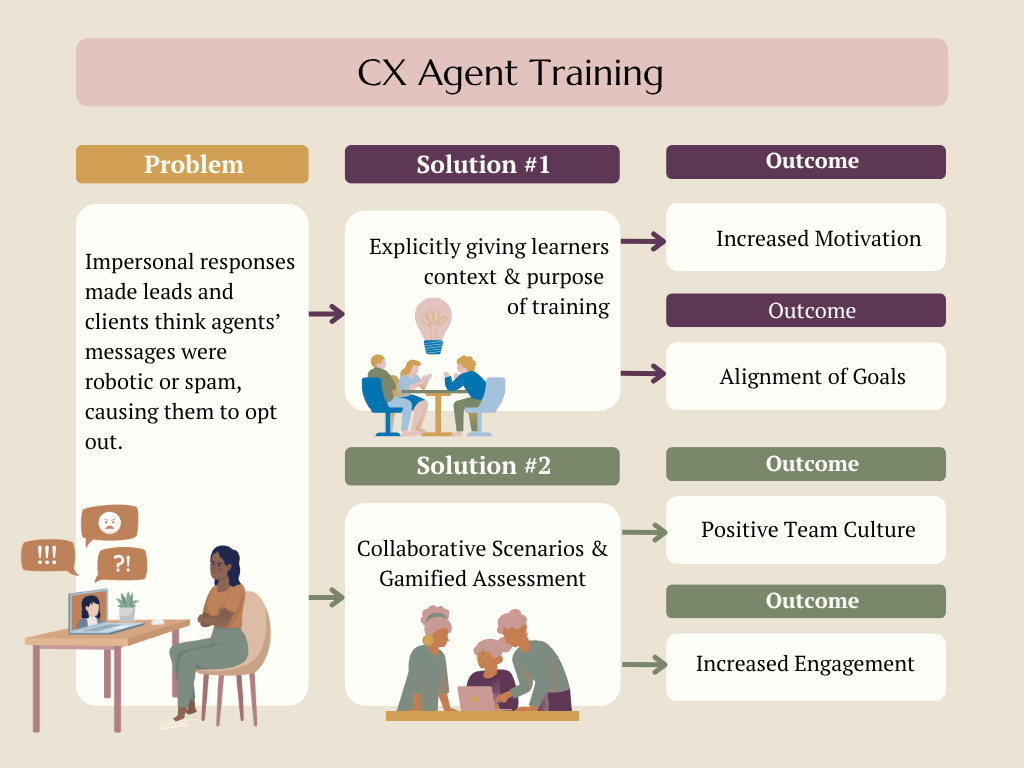
Customer opt-out rates were climbing and complaint volume around impersonal service was increasing. Before building any training, I needed to understand why agents were defaulting to overly-scripted responses and what was actually happening in those conversations at a behavioral level.
WHO I RESEARCHED & HOW
Conducted 1-on-1 qualitative interviews with customer experience agents to surface how they felt during high-volume periods, what made conversations feel hard, and where they lost confidence
Interviewed the team's top performer to identify the specific behaviors and decisions that separated effective conversations from scripted ones
Analyzed SMS opt-out data quantitatively to identify patterns in when and why customers were disengaging
Reviewed chat logs systematically to pinpoint the exact conversation moments where agent behavior was driving opt-outs
Combined qualitative interview findings with quantitative ticket and opt-out data using a mixed-methods approach to build a complete picture of the problem
WHAT I FOUND
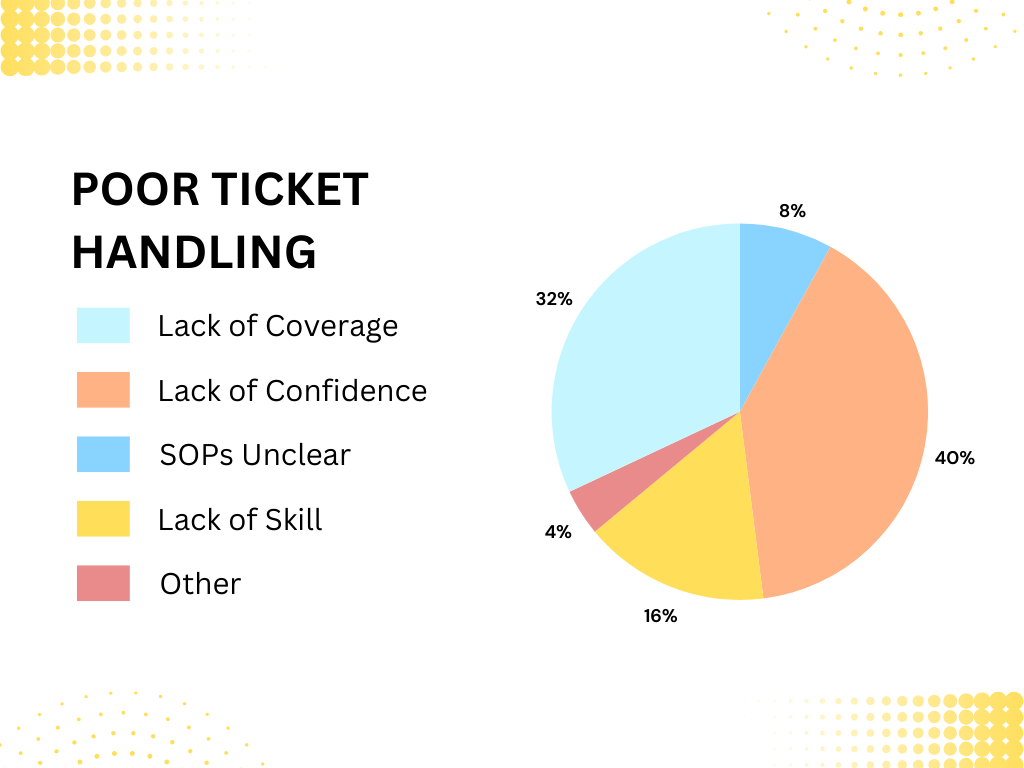
Agents weren't disengaged or undertrained - they were overwhelmed. High-volume periods were the primary driver of scripted, impersonal responses
Scripts were a coping mechanism, not a laziness problem. The training solution needed to address confidence under pressure, not just communication skills
Peak hours were understaffed, meaning the behavior problem had an underlying operational cause no amount of training alone could fix
The top performer wasn't following a better script - she was making real-time judgment calls based on reading the customer's tone and adjusting accordingly
Agents had no safe space to practice those judgment calls before using them on live customers
WHO I WORKED WITH
Collaborated with the co-founder, team managers, and a high-performing agent to align research findings with both the training design and the operational decisions that followed.
WHAT I RECOMMENDED
Design training around real missed-opportunity scenarios pulled from actual chat logs rather than hypothetical scripts - because agents needed to recognize familiar situations, not learn abstract principles
Build in structured practice through small breakout groups before any live customer application - creating the safe environment agents said they were missing
Surface the peak-hours staffing issue to leadership as an operational finding that training alone could not solve
Give managers a facilitator guide that required no prior training expertise, so the insights could be sustained without my direct involvement
WHAT CHANGED
Agents reported significantly higher confidence handling complex conversations without defaulting to scripts. Real-time assessment through an end-of-session game identified who needed additional 1-on-1 coaching, enabling targeted follow-up rather than blanket retraining. SMS opt-out rates decreased and customer complaints about impersonal service declined. Critically, the research finding about peak-hour overwhelm informed a business decision to hire additional support staff during high-volume periods - a structural fix that no training program could have achieved alone.
"Emily was instrumental in fostering a culture of continuous learning and growth within our organization." - Amber F., Co-founder, Huxley Social
WHAT I'D DO DIFFERENTLY
I would have gathered customer voice data directly - short exit surveys or customer interviews - rather than inferring customer experience solely from opt-out metrics and agent accounts. The agent perspective was rich, but triangulating it with actual customer feedback would have strengthened the research foundation.
METHODS & TOOLS USED
Mixed-methods research, 1-on-1 qualitative interviews, chat log analysis, opt-out data analysis, scenario-based instructional design, facilitated practice sessions, real-time assessment