
New Faculty Orientation Research & Redesign
CASE STUDY: New Faculty Orientation Research & Experience Redesign
Johnson & Wales University | Remote | 2022-2023
THE RESEARCH QUESTION
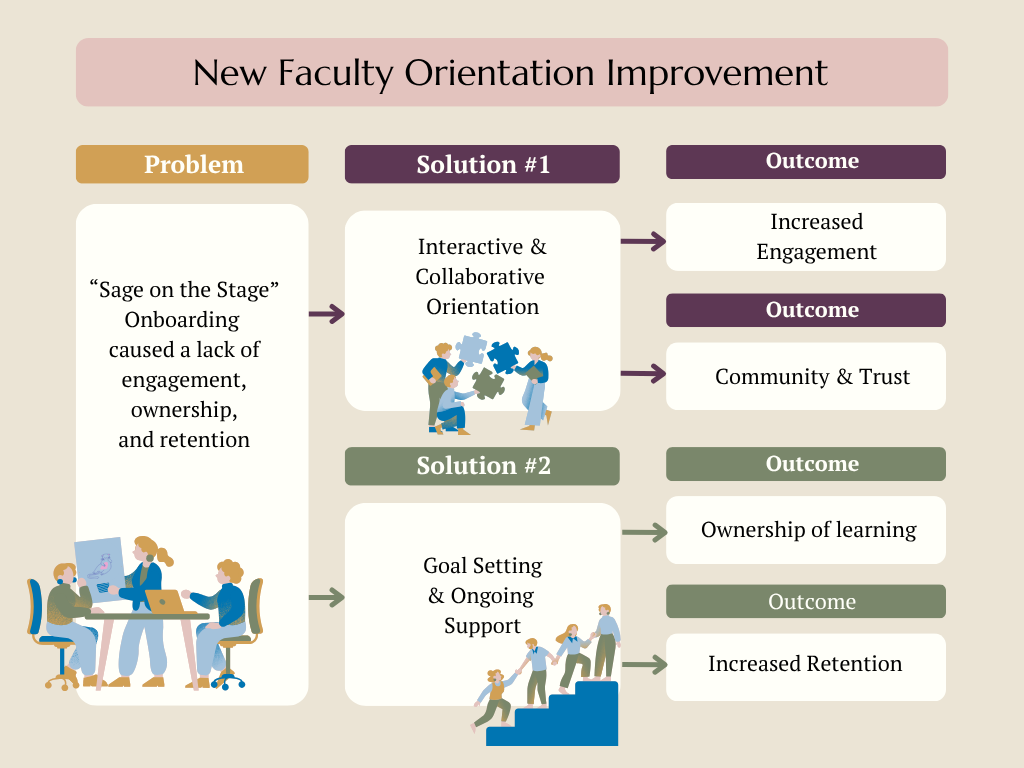
The existing New Faculty Orientation program was lecture-heavy and producing low retention of information and low faculty confidence entering their first semester. Before redesigning anything, I needed to understand what new faculty actually needed to feel supported, what was and wasn't working in the existing format, and what adult learning principles were being violated in the current approach.
WHO I RESEARCHED & HOW
Audited existing orientation materials with a subject matter expert to identify content gaps, redundancies, and information overload that was reducing retention
Applied Adult Learning Theory as a research lens to evaluate where the existing program was treating experienced professionals as passive recipients rather than active participants
Conducted one-on-one meetings with new faculty to surface individual strengths, gaps, and goals - gathering qualitative data on what each person needed to feel confident and supported
Used SMART goal-setting sessions as structured data collection points to understand faculty priorities and track progress across the semester
Administered surveys to measure faculty confidence in using resources and asking for help before and after the redesigned experience
WHAT I FOUND
The lecture-based format was generating passive compliance rather than genuine engagement - faculty were sitting through orientation rather than learning from it
New faculty arrived with significant existing expertise but needed community and connection as much as information - the existing program provided neither
Information overload in the existing materials was burying the high-impact essentials that faculty actually needed in their first weeks
Individual needs varied significantly - a one-size-fits-all group format was missing the specific gaps and strengths each person brought
Faculty confidence and willingness to ask for help was directly tied to whether they felt trusted and seen as professionals, not trained as novices
WHO I WORKED WITH
Collaborated with a Senior Instructional Designer to audit existing materials and align the redesign with institutional goals, while maintaining autonomy over the facilitation approach and individual support framework.
WHAT I RECOMMENDED
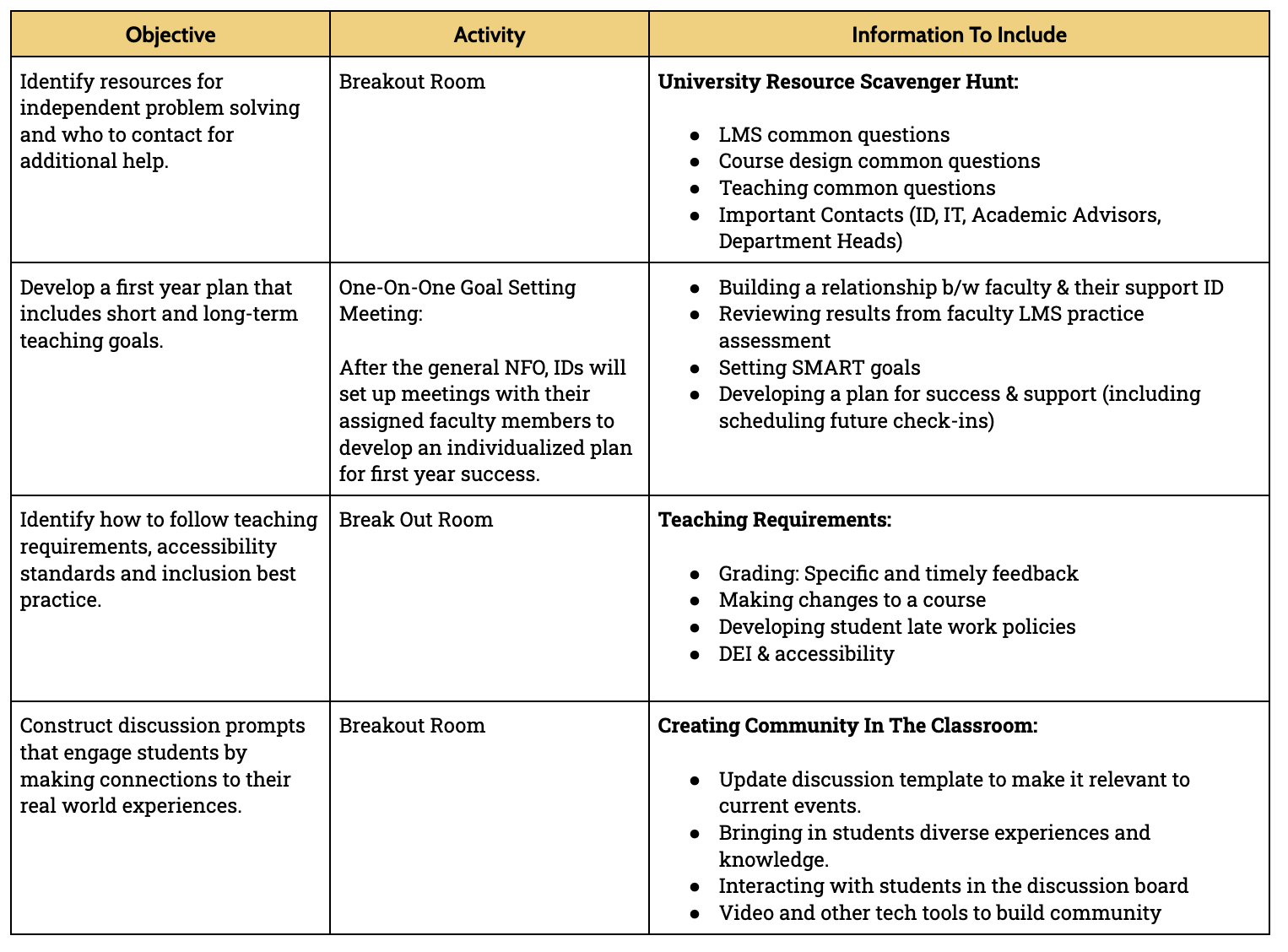
Transition from lecture-based delivery to active, participant-led group sessions that allowed faculty to build community while learning - treating orientation as a belonging experience, not an information dump
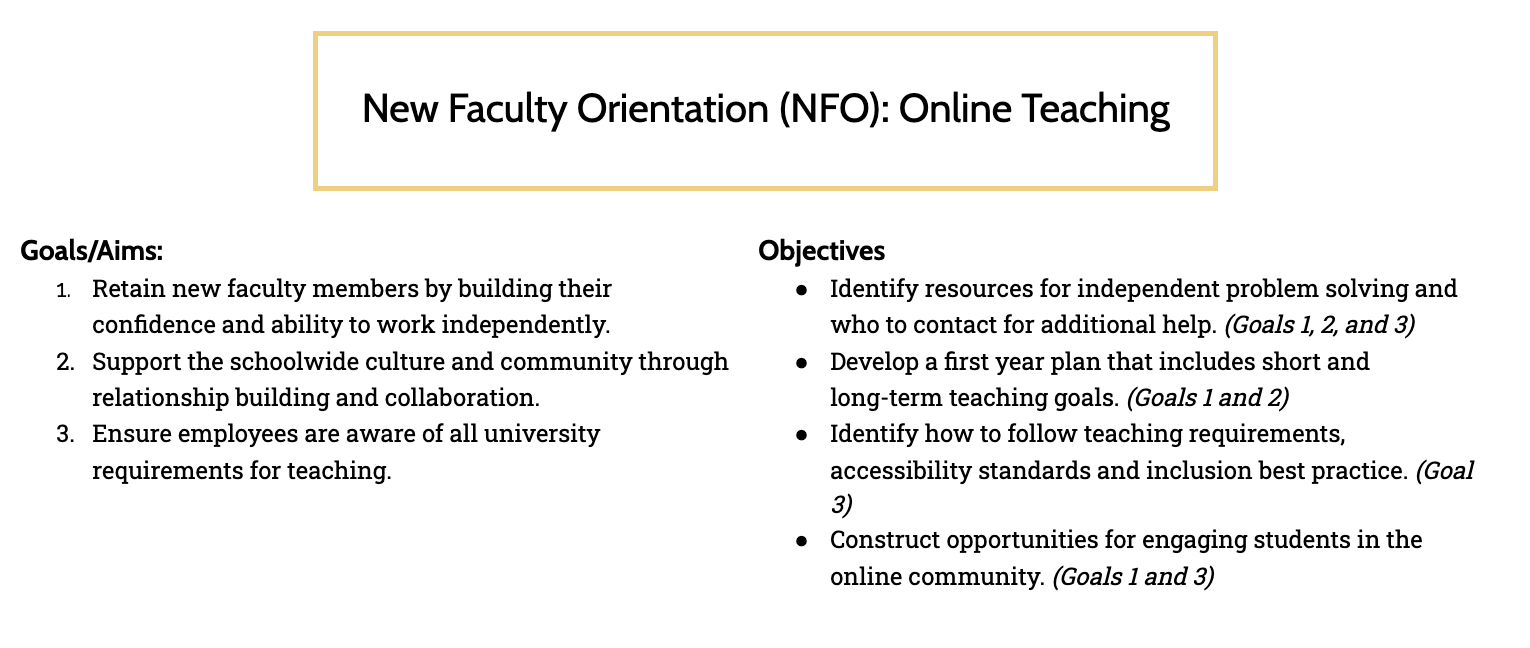
Streamline content to a targeted outline of high-impact essentials, removing the excess information that was reducing retention of what actually mattered
Layer individual one-on-one SMART goal-setting sessions alongside group meetings to capture qualitative data on each faculty member's specific needs and provide personalized support
Establish semester-long scheduled check-ins rather than treating orientation as a single event - sustaining support through the full first term rather than front-loading it at week one
Build a high-trust coaching relationship from day one so ongoing feedback and redirection could happen without resistance
WHAT CHANGED
The redesigned program achieved 100% faculty retention across a full academic year for my caseload. Post-program surveys showed faculty felt fully comfortable using resources and asking for help - a direct reversal of the confidence gaps identified in initial one-on-one sessions. Faculty became noticeably more proactive in presenting new ideas to their departments, and the trust baseline established through the personalized support framework made ongoing coaching and redirection significantly more effective.
"Emily's onboarding sessions were well received by new faculty members, who appreciated her engaging and interactive approach. She has a unique ability to tailor her training materials to meet the specific needs of the faculty, empowering them with the latest instructional strategies and technologies. Her ability to build professional relationships with faculty was evident in the continuous improvement of their teaching practices under her guidance."
- Heather M., Senior Instructional Designer, Johnson & Wales University